My First Firebird

Ballet Season Opener 016The atmosphere at the Long Center on Sunday of the Ballet Austin’s season opener was calm and serene, probably a stark contrast to the people down the road at Zilker Park braving the mud at ACL Fest. 

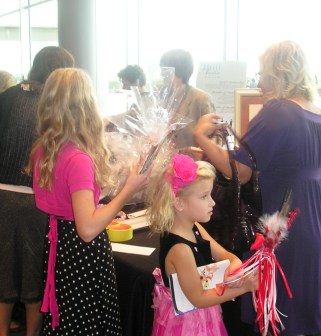
The make up of crowd was surprising. There were dozens of small children, especially little girls dressed up in tutus, carrying feather fans and signed pointe shoes bought at the colorful swag tables.

The performance started with the second act of Swan Lake. It was traditionally staged and performed, beautiful as it always is.

Ballet Season Opener 010


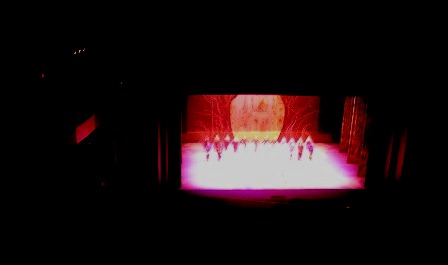
I however was more interested in seeing the Firebird. It was my first time seeing the Firebird actually performed as a ballet, and being a BIG Stravinsky fan I was excited. I was so thrilled with the performance, it was truly worthy of it’s composer. The choreography, stage effects and costumes were colorful and moody which perfectly reflected the complex and sometimes quirky nature of Stravinsky and his music. The costumes were fantastic and had a wide range of styles from the traditional red tutu of the Firebird to Kastchei the Immortal looking like he just left the set of The Nightmare Before Christmas.
 Ballet Season Opener 012

Ballet Season Opener 015

Artistic Director Stephen Mills answers audience questions

Afterward, choreographer Steven Mills held a question-and-answer session with the audience. He spoke briefly about the history of the Ballets Russes and the history of the Swan Lake and Firebird, then opened the floor to questions. It was an absolutley delightful afternoon and I can’t wait for Ballet Austin’s next production!

~Sarah Addison, Membership Associate

The Dynamic Duo is Aptly Named

ONE DYNAMIC DUO – Bates Rectal Hall October 7th, 2009-Butler School of Music –  University of Texas-Austin

Bion Tsang (cellist) and Anton Nel (pianist)

Anton Nel and Bion Tsang

Whether it was the gorgeous chordal surprises of Barber, the playful and percussive folk melodies of  Prokofiev or the lyrical sounds of Grieg, this dynamic duo executed this challenging program with ease and artistry.  Tsang and Nel had a communication that seemed mostly telepathic.

When the audience, on their feet, refused to leave Bates Recital Hall, it was rewarded with a couple of crowd-pleasers as encores — “The Swan” by Saint-Saens, and a Hungarian Dance by Brahms.

It is always a treat to hear two such superlative artists perform together.


~ Dianne Donovan, KMFA anouncer, host, and producer of Classical Austin, airing Sundays at 7pm.


Sonata, Op. 6, for Cello and Piano by Samuel Barber

Sonata in C, op. 119,  for Cello and Piano by Sergei Prokofiev

Sonata in A minor, Op. 36, for Cello an Piano By Edvard Grieg

Baroque Bliss at St. Austin’s

GalleryOrgan

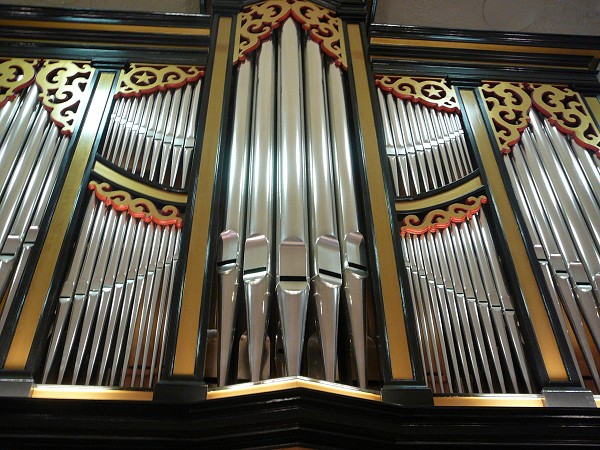
This is the gallery organ at St. Austin's Church on Guadalupe St.


There are many great things about living in America. But, if you’re an organ nut like me, one of the distinct disadvantages is the lack of authentic Baroque organs. Yes, I miss having a Schnitger down the street!  But the organ at St. Austin’s Catholic Church, recently built in the 18th century South German tradition, warmed my organ-loving heart at a Monday-evening performance by Eric Mellenbruch, organist of the Episcopal Church of the Good Shepherd; he gave a wonderful recital of mostly Baroque works, pieces that really showed what this little organ can do!

We were welcomed by St. Austin’s Music Director, Dr. John J. Hoffman. He invited us to walk around the sanctuary during the concert to hear the organ from various vantage points. Ordinarily I would have loved this, but I opted to remain in my seat to spare my fellow listeners the sound of my clickety-clackety shoes!

Mr. Mellenbruch dove straight into the good stuff with a rollicking Praeludium by Dieterich Buxtehude. (If you’ve never heard that word used to describe organ music before, please, do yourself a favor and listen to a good recording of Buxtehude!) We were also treated to a worshipful and serene ciacona based on a hymn tune by Johann Gottfried Walther, a set of variations by Sweelinck that really showed off the colors of the organ, and a glorious Fantasia by the little-known Belgian composer Abraham van den Kerckhoven. The solo voice used in that piece, the Sesquialtera, was the aural equivalent of a cool, clear cascade of water.

If you get the chance, go hear this instrument! The little organ that can (and does!) open the door for us to travel back to the Baroque — a pleasant journey indeed in the hands of an organist like Eric Mellenbruch.

~Sara Hessel, KMFA  Music Director

What a GREAT Day!

summer_songIt’s our last day of the Fall Pledge Drive, and we are mere dollars away from our goal as I write this… and everyone is excited and buzzing about, even more than usual!
Announcers are humming as they play music and chat between breaks; my fellow staff members are singing a few bars as they dash back and forth from the pledge room to the Master Control booth; volunteers are excitedly taking calls and sharing the fun as they talk on the phone; and everywhere, someone will spontaneously burst into laughter.

It’s my favorite day of the drive, and while we are always thrilled to achieve this goal, I’m a little bit sorry to see it end. The flurry of activity, the calls and comments of listeners, the fast-paced interaction with colleagues and volunteers…. as well as the insights, observations, and humor that our beloved on-air announcers share with us as they ask us to step up and pledge… these are some of my favorite things about the Pledge Drive.

Before we are swept up in the final wave of pitching and pledging and applause, I just want to thank all our listeners and donors for keeping Austin classical!

Thanks again,

~Alison Cowden, office manager

A Poem for our Pledge Drive

Hi, I’m Kelsey Padgett, a UT student who has had the good fortune to be a long-time intern here at KMFA.

As you may know, our Fall membership drive is coming up fast, and we are excitedly preparing. I get to help open listener correspondences, including letters of joy and encouragement from devoted listeners.

Recently we received a beautiful poem about the classical music we air on KMFA, 89.5, and I asked if I could share it on our blog:

The Sounds of KMFA

From out of

The past,

Sounds of today.

Sounds for

Your day

And mine.

Sounds to

Work to,

Sounds to

Play to,

Sounds to

Relax to.

Sounds of

Giants

Coming across

The years,

Coming Through

The atmosphere,

Coming to

Calm, enlighten

And inspire.

Sounds of Genius

Talking in

Musical notes,

Through metal,

String, and reeds.

Sounds of conversations

Among instruments,

Teasing, Taunting,

Luring us

From our depths

To their heights,

Sharing their

Gift

With humanity.

Sounds of

Classic beauty

Traveling

Sophisticated equipment

To modern ears,

Sounds uniting

Past and present

In a timeless

Union.

Author: Viola Rutz

Thanks so much Mrs. Rutz, and everyone who gives their support during our membership drive.

~ Kelsey Padgett, Production & Development Associate

Piano Enthusiasts — Watch “Note by Note” on KLRU!

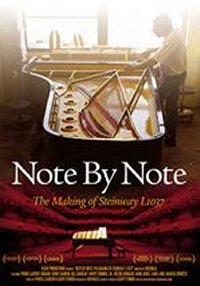
I noticed a great show airing tonight on KLRU (our local Public Broadcasting Station)… Note by Note: The Making of Steinway L1037. Note_by_Note-_The_Making_of_Steinway_L1037

Here’s the official synopsis:
NOTE BY NOTE (THE MAKING OF STEINWAY L1037)
“The most thoroughly handcrafted musical instruments in the world, Steinway pianos are as unique and full of personality as the world-class musicians who play them. However, their makers are a dying breed: skilled cabinetmakers, gifted tuners, experienced wood workers and hand-crafters. This program follows the creation of a Steinway concert grand, #L1037 — from the Alaska forest to the concert hall. It explores the relationship between musician and instrument, chronicles the manufacturing process and illustrates what makes each piano unique in this age of mass production. The journey spans 12 months, 12,000 parts, 450 craftsmen and countless hours of fine-tuned labor. ”

That sounds a little dry… compared to the viewer comments left on the movie’s offical website:

“Our family viewed Note by Note this weekend… none of us spoke for the entire 81 minutes… beautifully filmed and told. None among us is a pianist, yet this documentary touched us deeply. Bravo!”

The film has won numerous Film Festival awards. It should be well worth the watching!

~ Alison 🙂

In the KMFA Studios: La Follia!


Soprano Gitanjali Mathur

Soprano Gitanjali Mathur

LFsmall15

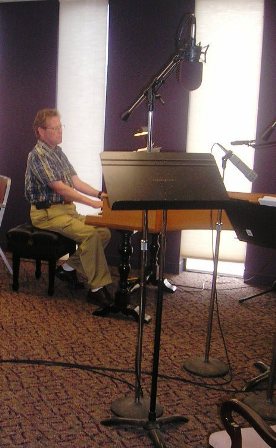
Harpsichordist (and artistic director) Keith Womer

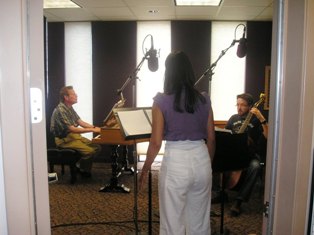
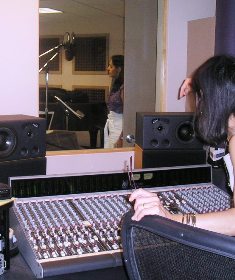
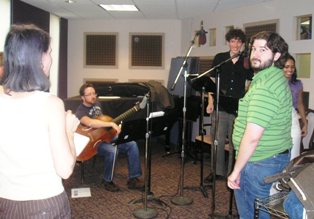
Inter-studio newsflash: La Follia Austin Baroque is here in the KMFA studio as I type this! They are preparing for a live/recorded-to-tape interview with Dianne Donovan for her Sunday evening show, Classical Austin. It’s causing quite an exciting buzz on what is usually a quiet Friday afternoon here at KMFA… I’ve been walking around our first-floor offices, exclaiming “Did you know there’s a *harpsichord* in Studio 2000?!”

Here are few photos I took while they were warming up….they sound wonderful, and there’s a concert on Monday with guest performer, Andrew Hallock, at the First Presbyterian Church, at 8pm. I don’t think it’s on their website, so you heard it here first! 😉

~Alison Cowden, KMFA Blogger

LFsmall1

Keith Womer tunes the harpsichord while James Brown warms up the viola da gamba


LFsmall4

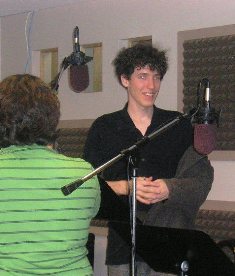
Jeffrey Blair scrutinizes the microphone placement


 LFsmall5


LFsmall7

Dianne checks levels on the board during warm-up


LFsmall10

Dianne (left) and Phil (right) do a sound check

LFsmall9

Countertenor Andrew Hallock


For more information about this early-music group, including their upcoming concert schedule, visit their website: www.LaFollia.org.

Love Songs of Bats… Decoded


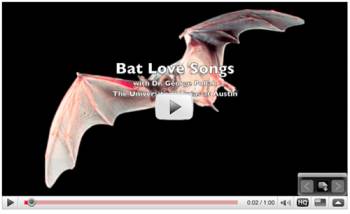
a bat named "Sid" pitches woo

a bat named "Sid" pitches woo


(This article is posted in its entirety on the U.T. website: click here.)

AUSTIN, Texas — It might not sound like crooners singing about love on the radio, but bats sing love songs to each other too, say researchers at The University of Texas at Austin and Texas A&M University who are believed to be the first to decode the mysterious sounds made by the winged creatures.They determined that male bats sing songs with distinguishable syllables and phrases to attract females, and in some cases, to warn other males to stay away.

“I am amazed at the richness of the vocal repertoire that bats use for social communication,” says George Pollak. “Their courtship songs are perhaps the most surprising, since each song is complex and structured.”

“The sounds they make are very difficult for the human ear to pick up,” explains Kirsten Bohn, the lead researcher of the project. “It’s at a very high frequency range, but our recording equipment could track it very well.

“The sounds are made in a specific, arranged pattern to form a song, and there are actually organized sequences within each phrase. They are made to attract and lure in nearby females.”

The researchers recorded bats from Austin, where more than one million Mexican free-tailed bats live downtown beneath Ann Richards Bridge, and Kyle Field in College Station, where an estimated 100,000 to 250,000 bats are believed to be winging their way around the football stadium and athletic complex.

“We compared the recordings made by bats in Austin to those at Kyle Field, and we discovered they were almost exactly the same,” says Bohn. “The bats in both places use the same ‘words’ in their love phrases.”

Bohn says the results are surprising because in general terms, mammals such as bats don’t have language rules—the use of specific sequence of phrases and a complex means of communication to others in their species.

“With the possible exception of whales, you normally don’t have this type of communication technique,” she says. “You see it frequently in birds, but that’s about it. We’ve learned the vocal production of bats is very specific and patterned, and now we have a model not only to study communication similarities in other animals, but also human speech. So we think this is a big first step.”

Pollak adds, “Who would have thought that bats could have one of the most sophisticated and rich vocal repertoires for communications of all animals?”

Excelling without Excluding: Texas Choral Consort’s Summer Symposium

Submitted by Phil Pollack

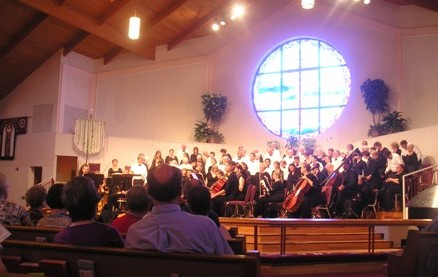
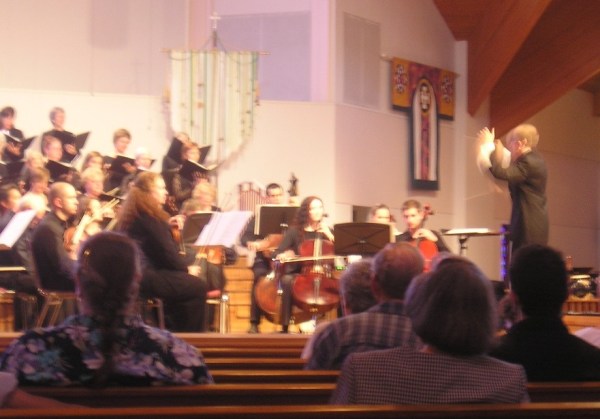
The Texas Choral Consort (TCC) recently concluded their 12th season with a non-auditioned symposium concert titled “A Shadow of Light.” I was fortunate enough to be in attendance for the Sunday performance and TCC treated me to five works from disparate musical periods, performing each piece admirably.


TCC

 Each of these works was tied to the others by its composer’s homage to earlier periods and musical styles, and for a universal music lover such as myself there really could not have been a better format for a concert. Not only did I receive a fresh lesson in Baroque music, something I admittedly know little about, but I was treated to two modern pieces, one of which was being premiered by TCC. I thoroughly enjoyed this premier work, Peter Stopschinski’s Orff’s Good Fortune. For me, it was the highlight of the show, combining elements of Carl Orff’s Carmina Burana with chord progressions I swear I’ve heard in modern pop music.
 

great stuff 003

 In addition to the stellar musical content, I was also impressed by the balance between the instrumentalists and the singers. Each performer in the group knew when to stand out and when to sit back, and their musical blend benefited immensely from this attention to detail. Northwest Hills United Methodist Church provided a great venue for the musical interplay, allowing the audience to hear all of the detail in these works without blowing them back in their seats. All of this from a group that accepts anyone in their symposiums; the only requirement being a genuine interest in singing. If you are interested in learning more about this Austin choral group, visit their newly redesigned website: www.txconsort.org.
 

~ Phil Pollack,  KMFA  Technology & Production

Then and Now: Itzhak Perlman performing Mendelssohn

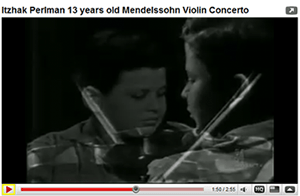
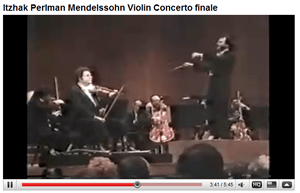
Every now and then, a video will circulate around the radio station that reminds me what classical music looks like, and I get a glimpse of the human element.  Here are two such videos: the first featuring Itzhak Perlman at age 13, and the second video featuring him as an adult; both feature the Mendelssohn Violin Concerto.  They are both delightful performances, but I was surprised to observe that, as a young teen, he was a taciturn and serious performer, whereas his enjoyment and humor seemed to expand as he matured. 

Enjoy!

~Alison Cowden, KMFA webmaster

 Itzhak Perlman video - childItzhak Perlman video - adult