Everything Old is New Again

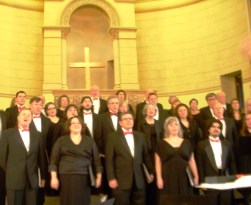
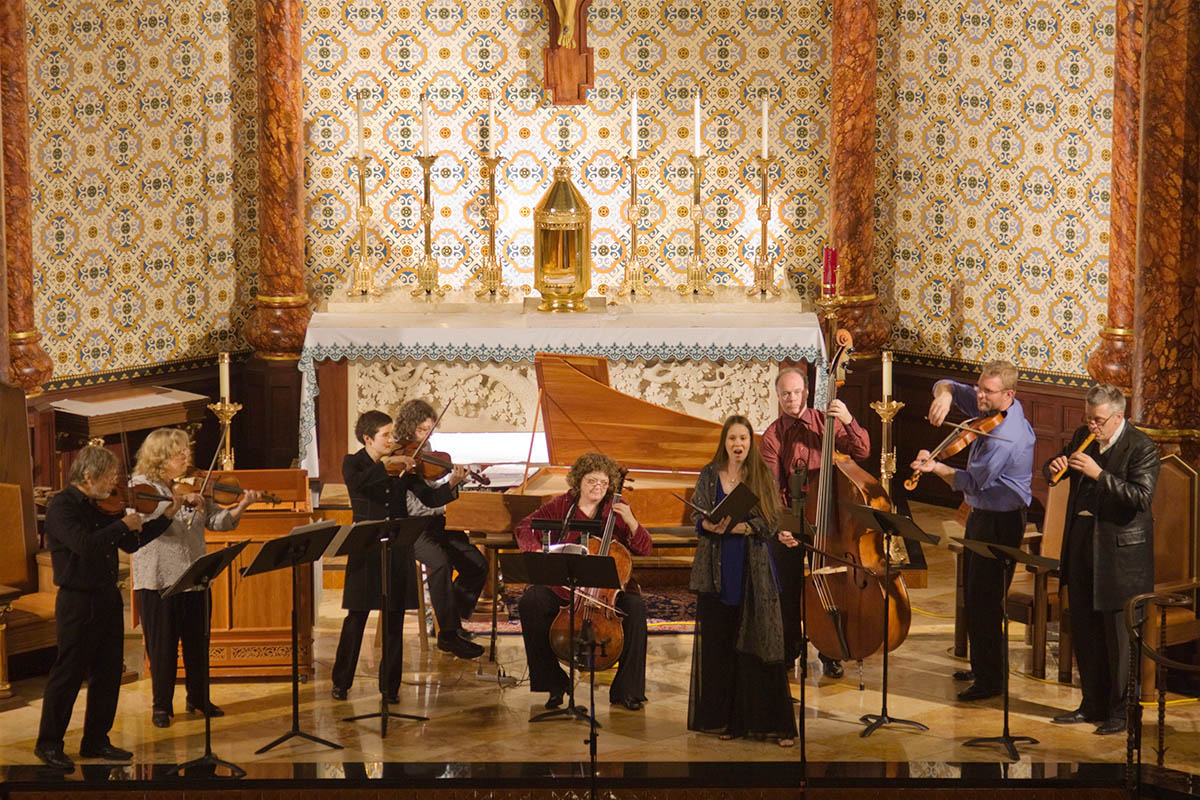
(photo credit: Jim Garrison took this spectacular shot from the balcony view at St. Mary Cathedral.)


~ submitted by Sara Hessel, KMFA Music Director 

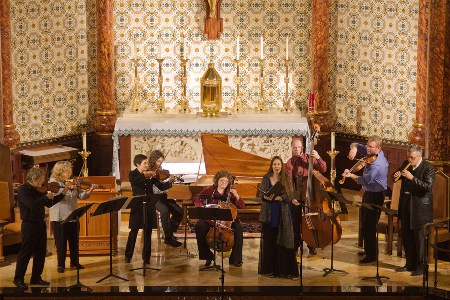
A fine crowd gathered in St. Mary Cathedral on Friday, January 29 to hear ‘Harmonia Ariosa: Vocal and Instrumental Music from 17th century Austria and Italy,’ performed by Laurie Young Stevens and Friends and presented by Texas Early Music Project. Violinist Laurie Young Stevens is one of Austin’s premier period-instrument performers, and LYS & Friends has become a yearly concert event. If I had friends like Laurie’s, I’d want to show them off, too!

Internationally acclaimed Argentinean violinist Manfredo Kraemer joined in for the first time. He has performed with exceptional early music ensembles like Musica Antiqua Köln and Jordi Savall’s Concert de Nations, and can be heard on countless CDs. What a joy and a pleasure it was to hear him perform works like Schmelzer’s Harmonia a 5 and Biber’s Partita III.

Cellist Phoebe Carrai has become an LYS & Friends regular, and I always look forward to her amazing performances. A highlight this time was a moving canzona by Frescobaldi, in which she made her 17th century cello ring with marvelous sonorities.

Another Friend we’re always glad to see return is recorder virtuoso Paul Leenhouts from the Netherlands. He blew us away (literally!) with his amazing technique, fleet fingers and seemingly boundless lung capacity! The audience loved his performance of Canzone Sesta by Angelo Berardi, judging by the ensuing applause and cheers! Paul also arranged the pieces on the program, and included 3 pieces that he discovered in various libraries and archives around Europe, works never before heard on US soil. It’s amazing to think of ‘new’ early music- pieces that may not have been heard since their first performance (if at all). One of Paul’s finds, Paduana and Gagliarda V by Isaac Posch, was a highlight for me, being exceptionally lovely with just the right amount of Germanic melancholy. My other favorite piece on the program was Georg Muffat’s Passacaglia (sometimes called Chaconne) from Sonata V, a work of absolute soaring beauty that will cure any bout of the blues. You’ll hear it in rotation on KMFA, which I consider a public service.  🙂

Harpsichordist/organist Gabriel Shuford was kept busy all evening playing continuo, but he also had his chance to shine in a solo toccata by Frescobaldi. Frescobaldi was nice enough to warn potential players in the manuscript: “you won’t get to the end without suffering.” But Gabriel didn’t even seem to break a sweat as he wowed the audience with this aural thrill ride, full of bizarre chromatics.

Completing the group of friends were violinist Kathleen Kajioka from Toronto, violist Andrew Justice from Denton, contrabassist David Dawson from Austin, and superlative soprano Jenifer Thyssen, well known to early music fans here in Central Texas.

Keep bringing your friends to town, Laurie! I’m sure I’m not the only one already looking forward to next year’s performance!

(submitted by Sara Hessel, KMFA Music Director )
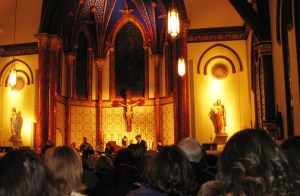
(Dianne Donovan took this photo of the beautiful church stage)
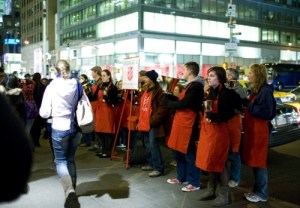
Improv Handbell on the streets of NYC

We received this link to a fun video (from our friends at Minnesota Public Radio)…. it features a 13-member handbell choir providing some unexpected accompaniment for a Salvation Army bell-ringer on Lexington Avenue in Manhattan.  It’s fun to watch people’s reactions, including the Salvation Army bellringer, who seems to be caught by surprise himself…

Watch the video by clicking this photo:

TCC gives us our our “Choir Fix” for the season

(photos by R. Sweeney)

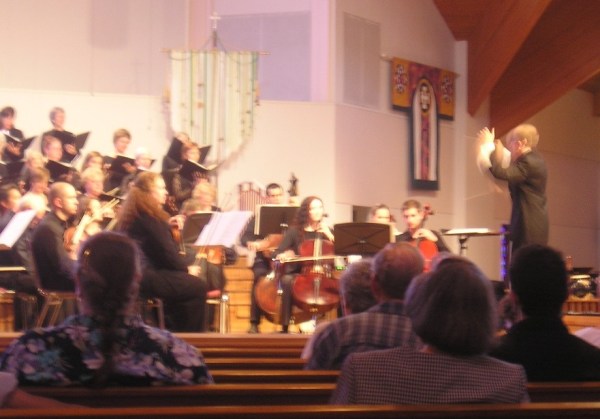
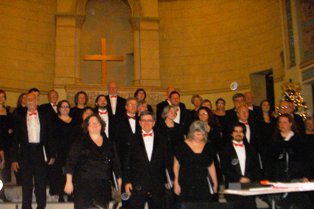
Last weekend we enjoyed our Christmas choir “fix” for the season: several of us attended the Texas Choral Consort annual Christmas event,  this year titled: Winter on the Wing.   

KMFA’s daytime announcer, Dianne Donovan, introduced the event on Friday evening, and our very own Phil Pollack (Technical Operations Manager) was one of the performing tenors. There were lots of familiar faces in the crowd (I went to the Sunday performance) and I recognized several friends and members of KMFA.  

As usual, there was a diverse sampling of musical treats, ranging from an early-music German piece by Buxtehude, to a contemporary piece by jazz musician Vince Guaraldi. The Director, Brent Baldwin, even participated in an early Spanish piece, “Riu, Riu, Chiu”… sample some short videos below… fun!).  

For a choral layman like me, it’s always entertaining to enjoy the relatively obscure alongside the comfortably familiar.  🙂  

~ submitted by Alison @ KMFA  🙂


At the Opera: ALO’s La Boheme!

 (submitted by Doug Shands, producer of KMFA’s Windsounds)
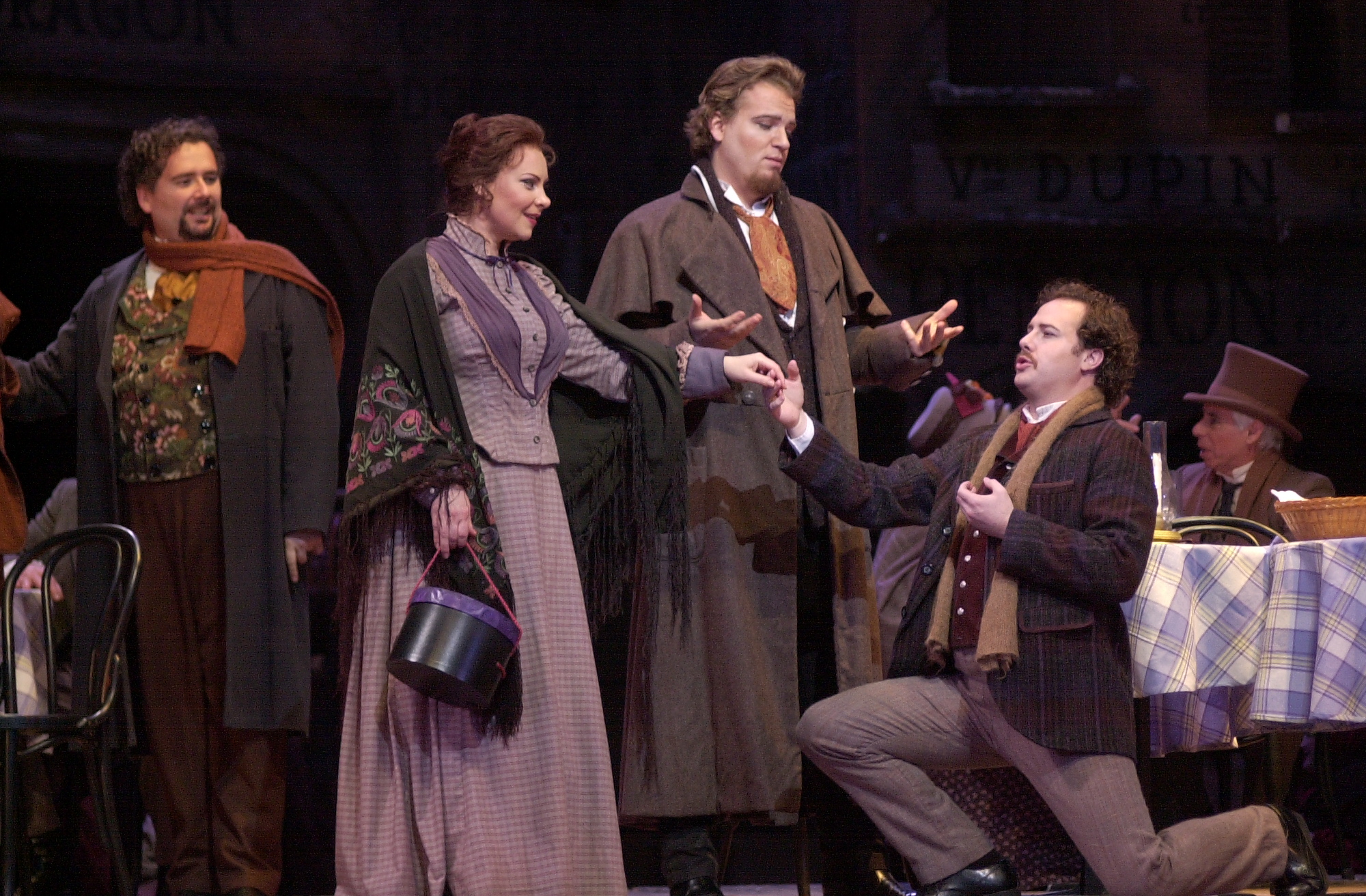
My friend Bruce and I attended the Friday performance of Austin Lyric Opera’s production of Puccini’s La Boheme. The performance was excellent, and the staging was perfect for the story! The singers portrayed their respective roles in a believable and appropriate manner.


La Boheme is an opera wonderfully suited for a neophyte’s first opera. The Austin cast was humorous when called for and sad when necessary. Mimi’s death scene at the conclusion was touching, without being maudlin. The sets were great! They gave the feel of 19th century Paris and in some cases were truly works of art. In my opinion, La Boheme set a high standard for future Austin Lyric Opera productions!

~ Doug Shands

The Bach Cantata Project at the Blanton Museum


(posted by Cara Kannen, KMFA’s Membership Director)

 “I’m BACH!”  😉

Let me first take the opportunity to express how overjoyed I am to be back at KMFA. Besides the wonderful people here, and non-stop immersion in beautiful music, one of the things I missed most during my time away from the station was attending the Bach Cantata Project performances at the Blanton.

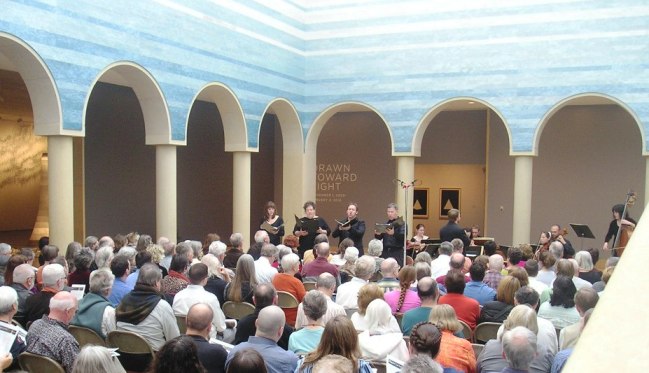
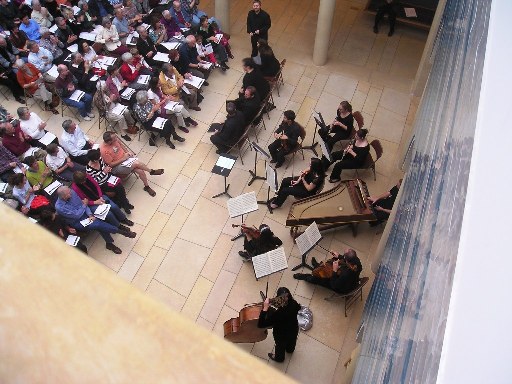
For those who have never been, the Bach Cantata Project is a joint venture between the choral department of the UT Butler School of Music and the Blanton Museum of Art. Each month, students and faculty present a beautiful Bach cantata in the Blanton’s atrium. Afterward, a Blanton tour guide hosts a special viewing and history of a featured piece of artwork chosen to tie closely to the theme of the cantata.

The first time I heard a Bach Cantata performed in the atrium, I marveled at how surprisingly pleasing the acoustics were and how beautifully the space, with its soaring ceiling and skylights, set a tone of peaceful contemplation. Another relatively recent enhancement in the atrium, installed around the first of the year, is a site-specific work in cast acrylic titled Stacked Waters. The reflective striped-blue patterns around the atrium walls resemble water and lend an additional element of peacefulness to the venue.

The theme of October’s cantata was based on a communion hymn, composed by Bach for performance in 1724. Whether thoughts of observing communion or celebrating God’s wedding feast filled your mind, the warmth of the music certainly fed the soul at the noon hour.

I encourage you to mark your calendar for the next Bach Cantata Project on Tuesday, November 24th. Museum admission covers both the music performance and the galleries and tours after. The performance begins at noon and is the perfect escape over the lunch hour for a refreshing change. But do plan to go a little early, as the seats fill up fast. Bach Cantata project performances take place the last Tuesday of every month (except December) from September through April. Maybe I will see you there….I’m the one in the “standing room only” section dancing next to the KMFA banner!

Cheers!

~ Cara

A Familiar Voice in an Unexpected Venue…

baldwin_bio_banner

On Tuesday evening I was listening to KMFA’s regular weekly program,  New York Philharmonic This Week. Well, not so much listening as passively enjoying the performance music in the background while I worked on some documents… and as the pieces were introduced, I kept wondering, where have I heard that voice before….?

The Radio Host of New York Philharmonic This Week is Alec Baldwin!  As a Long Island native, Mr. Baldwin has been a big fan of the NY Phil, so it all came together quite naturally, it seems. He does a wonderful job, although I’ll admit I keep expecting him to say some absurd and hilarious remark like his comedic character from his television show.

Read more about it on the NYPhil website: http://nyphil.org/about/bio_baldwin.cfm

~Alison Cowden, KMFA webmaster

My First Firebird

Ballet Season Opener 016The atmosphere at the Long Center on Sunday of the Ballet Austin’s season opener was calm and serene, probably a stark contrast to the people down the road at Zilker Park braving the mud at ACL Fest. 

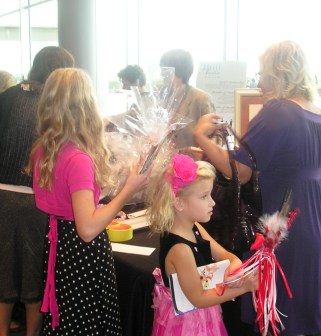
The make up of crowd was surprising. There were dozens of small children, especially little girls dressed up in tutus, carrying feather fans and signed pointe shoes bought at the colorful swag tables.

The performance started with the second act of Swan Lake. It was traditionally staged and performed, beautiful as it always is.

Ballet Season Opener 010


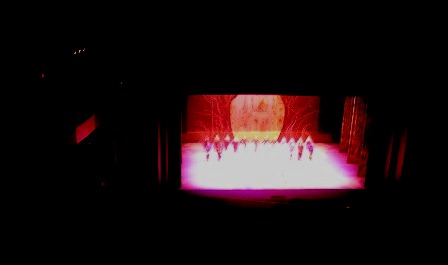
I however was more interested in seeing the Firebird. It was my first time seeing the Firebird actually performed as a ballet, and being a BIG Stravinsky fan I was excited. I was so thrilled with the performance, it was truly worthy of it’s composer. The choreography, stage effects and costumes were colorful and moody which perfectly reflected the complex and sometimes quirky nature of Stravinsky and his music. The costumes were fantastic and had a wide range of styles from the traditional red tutu of the Firebird to Kastchei the Immortal looking like he just left the set of The Nightmare Before Christmas.

 Ballet Season Opener 012

Ballet Season Opener 015

Artistic Director Stephen Mills answers audience questions

Afterward, choreographer Steven Mills held a question-and-answer session with the audience. He spoke briefly about the history of the Ballets Russes and the history of the Swan Lake and Firebird, then opened the floor to questions. It was an absolutley delightful afternoon and I can’t wait for Ballet Austin’s next production!

~Sarah Addison, Membership Associate

Baroque Bliss at St. Austin’s

GalleryOrgan

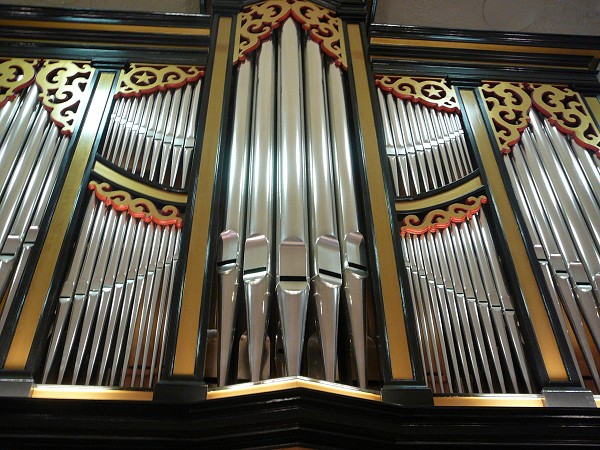
This is the gallery organ at St. Austin's Church on Guadalupe St.


There are many great things about living in America. But, if you’re an organ nut like me, one of the distinct disadvantages is the lack of authentic Baroque organs. Yes, I miss having a Schnitger down the street!  But the organ at St. Austin’s Catholic Church, recently built in the 18th century South German tradition, warmed my organ-loving heart at a Monday-evening performance by Eric Mellenbruch, organist of the Episcopal Church of the Good Shepherd; he gave a wonderful recital of mostly Baroque works, pieces that really showed what this little organ can do!

We were welcomed by St. Austin’s Music Director, Dr. John J. Hoffman. He invited us to walk around the sanctuary during the concert to hear the organ from various vantage points. Ordinarily I would have loved this, but I opted to remain in my seat to spare my fellow listeners the sound of my clickety-clackety shoes!

Mr. Mellenbruch dove straight into the good stuff with a rollicking Praeludium by Dieterich Buxtehude. (If you’ve never heard that word used to describe organ music before, please, do yourself a favor and listen to a good recording of Buxtehude!) We were also treated to a worshipful and serene ciacona based on a hymn tune by Johann Gottfried Walther, a set of variations by Sweelinck that really showed off the colors of the organ, and a glorious Fantasia by the little-known Belgian composer Abraham van den Kerckhoven. The solo voice used in that piece, the Sesquialtera, was the aural equivalent of a cool, clear cascade of water.

If you get the chance, go hear this instrument! The little organ that can (and does!) open the door for us to travel back to the Baroque — a pleasant journey indeed in the hands of an organist like Eric Mellenbruch.

~Sara Hessel, KMFA  Music Director

Piano Enthusiasts — Watch “Note by Note” on KLRU!

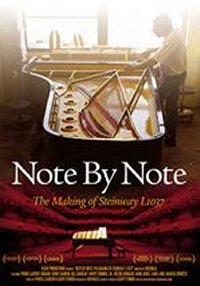
I noticed a great show airing tonight on KLRU (our local Public Broadcasting Station)… Note by Note: The Making of Steinway L1037. Note_by_Note-_The_Making_of_Steinway_L1037

Here’s the official synopsis:
NOTE BY NOTE (THE MAKING OF STEINWAY L1037)
“The most thoroughly handcrafted musical instruments in the world, Steinway pianos are as unique and full of personality as the world-class musicians who play them. However, their makers are a dying breed: skilled cabinetmakers, gifted tuners, experienced wood workers and hand-crafters. This program follows the creation of a Steinway concert grand, #L1037 — from the Alaska forest to the concert hall. It explores the relationship between musician and instrument, chronicles the manufacturing process and illustrates what makes each piano unique in this age of mass production. The journey spans 12 months, 12,000 parts, 450 craftsmen and countless hours of fine-tuned labor. ”

That sounds a little dry… compared to the viewer comments left on the movie’s offical website:

“Our family viewed Note by Note this weekend… none of us spoke for the entire 81 minutes… beautifully filmed and told. None among us is a pianist, yet this documentary touched us deeply. Bravo!”

The film has won numerous Film Festival awards. It should be well worth the watching!

~ Alison 🙂

Excelling without Excluding: Texas Choral Consort’s Summer Symposium

Submitted by Phil Pollack

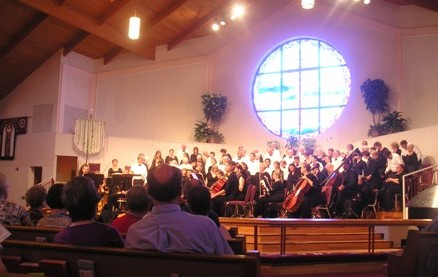
The Texas Choral Consort (TCC) recently concluded their 12th season with a non-auditioned symposium concert titled “A Shadow of Light.” I was fortunate enough to be in attendance for the Sunday performance and TCC treated me to five works from disparate musical periods, performing each piece admirably.


TCC

 Each of these works was tied to the others by its composer’s homage to earlier periods and musical styles, and for a universal music lover such as myself there really could not have been a better format for a concert. Not only did I receive a fresh lesson in Baroque music, something I admittedly know little about, but I was treated to two modern pieces, one of which was being premiered by TCC. I thoroughly enjoyed this premier work, Peter Stopschinski’s Orff’s Good Fortune. For me, it was the highlight of the show, combining elements of Carl Orff’s Carmina Burana with chord progressions I swear I’ve heard in modern pop music.
 

great stuff 003

 In addition to the stellar musical content, I was also impressed by the balance between the instrumentalists and the singers. Each performer in the group knew when to stand out and when to sit back, and their musical blend benefited immensely from this attention to detail. Northwest Hills United Methodist Church provided a great venue for the musical interplay, allowing the audience to hear all of the detail in these works without blowing them back in their seats. All of this from a group that accepts anyone in their symposiums; the only requirement being a genuine interest in singing. If you are interested in learning more about this Austin choral group, visit their newly redesigned website: www.txconsort.org.
 

~ Phil Pollack,  KMFA  Technology & Production