Brian Satterwhite invites listeners into his world of film music every Saturday morning at 10 on KMFA. We got a chance to ask him about what he does when he’s not hosting his popular Film Score Focus show. Find out what it’s like being a film composer by reading the Q&A below.
Q) How did you get involved scoring films? What were the steps that led you to becoming a film composer?
My love for film music began with my love for movies. I was three years old when STAR WARS (1977) came out and it changed the course of my life. Before cable or VHS recorders the soundtrack was really one of the only possible connections you had to relive the experience of a particular film. I would sit for hours and listen to my parents’ LP of STAR WARS and just stare at the pictures on the inside of the album. I still have that exact record hanging on the wall of my studio.
In elementary school I knew I wanted to be in band and so I chose the tenor saxophone as my instrument. I heard stories of my Dad playing tenor sax in high school and with the UT Marching Band so I always knew that was the instrument for me. As I developed as a musician, coming up with my own bits of musical material was always more interesting than performing somebody else’s. I was starting to realize that I wanted to be a composer but I didn’t really know what that meant or how I could apply that to my life.
Music was an encompassing part of my school years. Along side it I continued to nurture and develop my immense passion for movies. It wasn’t until EDWARD SCISSORHANDS (1990) came out that the two intersected. Like a light bulb going off, I realized that was the kind of music I wanted to compose. That’s what I wanted my music to do…to breathe life into the movies we adore.
By 1993, I was hooked forever. I discovered VERTIGO (1958), saw JURASSIC PARK (1993) ten times in the theater (the last three or four visits I brought a notebook and flashlight and took as many notes as I could about the score). I set my sites on Berklee College of Music where I could get a degree in film scoring and so in January of 1995, that’s where I went. The rest is history…
Q) As the host of Film Score Focus, you have many film score favorites I’m sure. What are your favorite film scores right now?
I definitely have a ton of favorites! My favorite score of all time is VERTIGO by Bernard Herrmann. I consider Howard Shore’s work on the LORD OF THE RINGS (2001-2003) to be the greatest achievement in the history of film music.
John Williams’ work on STAR WARS and RAIDERS OF THE LOST ARK (1981) are huge influences on my life.
In the past few years I’ve really developed an enormous respect and admiration for Michael Giacchino who did THE INCREDIBLES (2004), RATATOUILLE (2007), SPEED RACER (2008), and just recently completed three amazing scores all currently in theaters: STAR TREK (2009), LAND OF THE LOST (2009), and one of the best scores of the year so far, UP (2009). I had a total blast with Christopher Young’s score for DRAG ME TO HELL (2009) and the score for CORALINE (2009) by Bruno Coulais is a recent masterwork.
Q) You have worked on some critically acclaimed films this year with ARTOIS THE GOAT at SXSW and now QUARTER TO NOON which is part of the 2009 Texas Filmmakers Showcase. What’s up next? Can you give us a sneak preview?
The project that is occupying the majority of my time right now is called THE RETELLING (2009). It’s the latest feature film from writer/director Emily Hagins who at sixteen years-old is wrapping up her second feature film. She wrote, directed, and edited her first feature film PATHOGEN (2006) when she was twelve. I’ve known Emily for the past few years and its been a real treat to work with her. She really understands film and how music affects it.
I’ve also been busy working on a lot of smaller projects. I scored another short film for Kat Candler called LOVE BUG (2009), I’m currently working on a short film score for Will Moore, director of COWBOY SMOKE (2008), called FUNKY PICKLES (2009) and I’m also working with producer Mark S. Hall editing and scoring a short documentary about the film archives housed on the seventh floor of the Harry Ransom Center on the UT campus.
Q) What is the inspiration for the music you write? How do you sit down and start composing the melodies?
It’s definitely the film itself. The film reveals everything. Scoring a movie is a bit more utilitarian than most people realize. I pinpoint moments in the film where music needs to help the narrative. From there it’s about composing music the story needs to be successful. Sure, it’s still creative and there’s definitely an element of inspiration in there but the majority of it is purely functional.
Where the inspiration itself comes from varies. It may arise from the a particular character, the setting, the tone of the story, a plot device, a lingering emotion…it all depends.
One of the great things about scoring films is every project and every director is a different experience. Therefore my approach to scoring each film is different. Some scores are very melodic while others are not.
The way I enter each score is different as well. Sometimes I might start with a melody like I did with COWBOY SMOKE where I meticulously composed two themes before ever putting anything to picture. Other scores like ARTOIS THE GOAT (2009) developed as I went. I just picked a cue in the middle of the film that I had an idea for and away I went. I didn’t write any major themes for the film until I was a few cues into it. Sometimes I start at the beginning of the film, sometimes the end, and sometimes I pluck out chunks from the middle. It all varies so much from project to project.
Q) Have you ever been distracted while watching a movie by what you might judge as a bad film score? Do you have to ignore your music knowledge when watching films sometimes?
I get this question a lot and honestly if it’s a great film with a great score then I’m wholly wrapped up in it just like any other member of the audience who is enjoying the picture. If I were tuned in to every note of the score all the time that would be a curse. Most of the time if it’s good, I just kick back and enjoy it.
However, on the flip side of that, my experience and knowledge of film music sounds an alarm whenever I’m watching a film with a bad score. It’s distracting just like bad acting or bad writing can be. You don’t want anything in a movie to take you out of the story. Music can definitely be one of those things and when it does I notice it very quickly and it can be very annoying.
Q) How would you recommend to an aspiring film composer to get their big break?
Hmmm, I don’t know. I’m still trying to figure that out (laughs)….Actually, the first thing I would say is let passion fuel determination. This is a hard job and if you don’t love it it’ll burn you out quicker than you can blink. I’ve had moments where after working nearly thirty hours straight on a project nearing a deadline I stop and think, “Wow! You must really love doing this!” I truly do.
You also have to keep at it. I’ve been doing this professionally for eleven years and I’m still hitting the pavement and doing the hard labor just to stay afloat. Throughout my career I’ve encountered a whole host of wise and respectable reasons to quit and change the direction of my life. But I won’t. I’ll keep at it and continue to have faith in myself. In the end I have total confidence all of my goals will be fulfilled.
Finally – and this is one of the most important things I try to get across – learn film! Film scoring has so much more to do with filmmaking than it does music making. I would actually advise a young student wanting to be a film composer to go to film school before I would advise them to go to music school.
If I were a director, I’d rather hire an amateur musician who is a bona fide movie nut with an encyclopedic knowledge of film than a musician holding a doctorate degree in composition who hardly ever watches a movie. Scoring is a filmic craft.
Q) What is your guilty pleasure piece of music? (film score or non-film score)
Well I don’t feel guilty about it at all but most people may be surprised to learn I’m a diehard Prince fan. I’m also not one of those fair-weather fans who thought he was only good in the 1980’s. I’ve got every single album he’s ever released and love just about all of it. He’s the most gifted songwriter and performer of our time. I’ve seen him five or six times in concert and often fantasize jamming with him on stage. I can play a mean “Purple Rain” on the piano.
Q) and finally… Kris Allen or Adam Lambert?
Well, it’s funny. Since I work so much I didn’t watch much of AMERICAN IDOL this year. I’ve seen a few seasons in the past and caught a string of episodes here and there throughout its tenure.
One night during this past season however, I did come home when there were still around a dozen contestants competing and I heard Adam sing “Ring of Fire.” I told my wife, “That’s it…he’s going to be the winner.” I thought it was one of the best performances I’ve ever heard on AMERICAN IDOL. A few weeks later I caught him singing “Tracks of My Tears” and once again exclaimed he was going to win. I only saw a handful of other contestants this season and will admit that I have not heard Kris Allen perform so really I can’t judge between the two. But I will stand by my assessment that Adam was one of the best performers I’ve ever seen on AMERICAN IDOL.




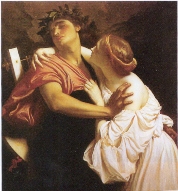
 your favorite performance of Christoph Willibald Gluck’s passionate love story, Orfeo ed Eurydice. I picked it because it’s about renewal, faith, and (literally) undying love, and it’s just long enough to prepare a simple meal without too much hustle and bustle.
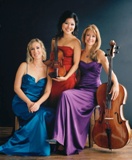 This past Sunday, I was fortunate to have acquired tickets to The Eroica Trio… they performed a stunning concert at Bates Recital Hall, UT Butler School of Music, as part of The Austin Chamber Music Festival. I really enjoyed the colorful and varied program that showcased both the talents of the individuals as well as the group’s uncanny sense of “oneness.” The highlight for me was the Piano Trio no. 1 by Edouard Lalo with it’s achingly beautiful “romance/andante” movement. Now I realize why this trio is one of the most sought-after in the classical music world.
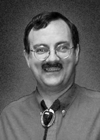 I’ve always been intrigued by the way music can pair with and blend, alter, or enhance movies and plays (and, of course, operas and musicals). Today, I write and perform music for television commercials and programs and some films, and it is fun to direct that “pairing energy” to accomplish a certain desired result.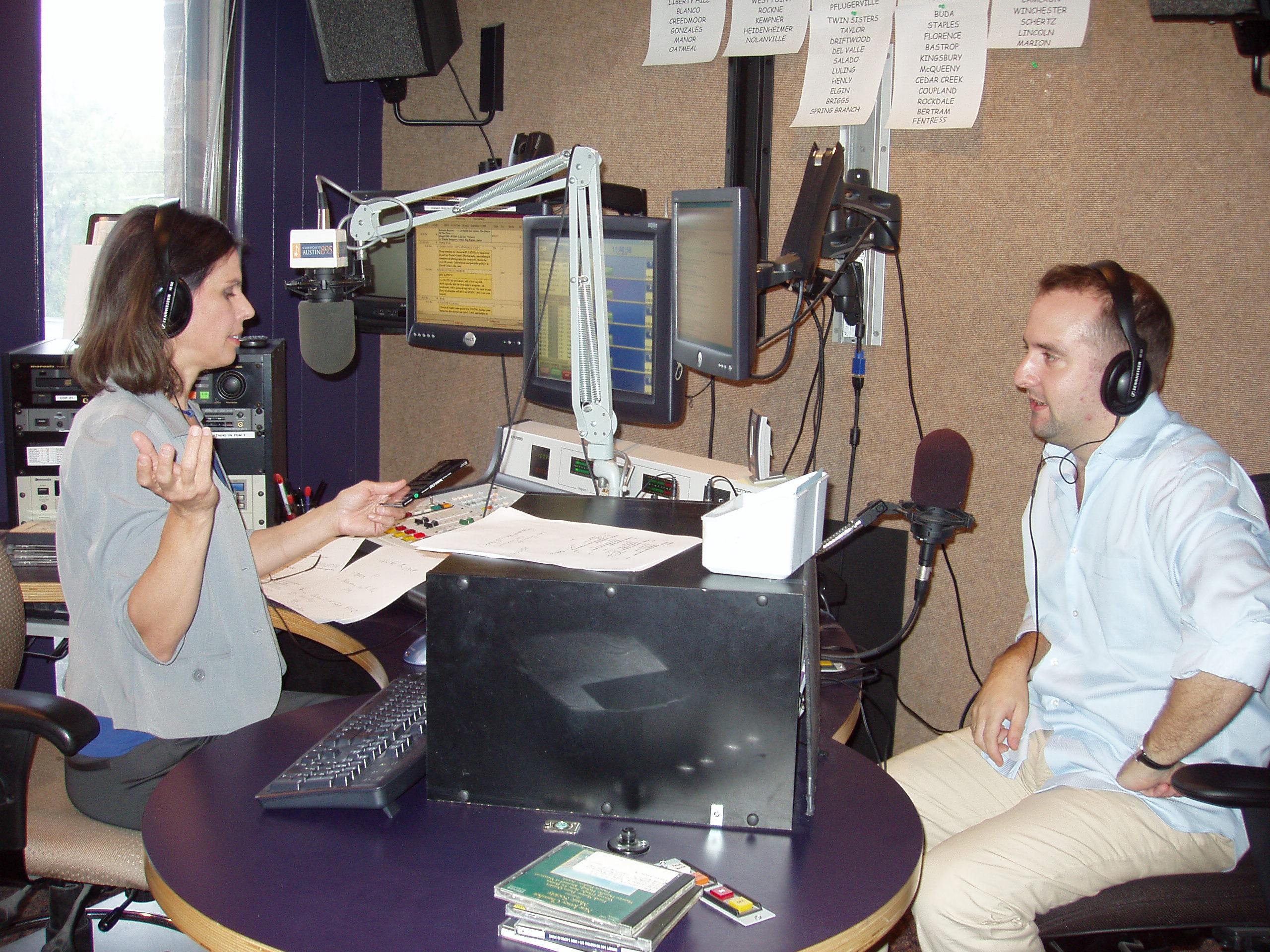
 local austin culture