
One of the best ways to decompress after a long, hot, triple-digit day is to come home and listen to  your favorite performance of Christoph Willibald Gluck’s passionate love story, Orfeo ed Eurydice. I picked it because it’s about renewal, faith, and (literally) undying love, and it’s just long enough to prepare a simple meal without too much hustle and bustle.
But what to eat, you say? You don’t want to heat up the kitchen in this weather, so do a little grilling. This meal is simple and cooks mostly by itself, and you’ll enjoy preparing it because you’ll be accompanied by the music of Gluck.
First, get a glass of wine or beverage of choice and put on the opera. While Orfeo is mourning his lost love with “Chiamo il mio ben, Objet de mon amour,” gather these ingredients:
- Whole Chicken, cut up

- Olive oil or melted butter or margarine
- Freshly ground pepper
- Fresh Garlic
- Dark Brown Sugar
- Corn on the Cob (with husks still attached)
- Romaine Lettuce/Dressing
Put the garlic through a garlic press and mix with the pepper, oil or butter and just a pinch of brown sugar. Season to taste and relax while the ingredients get to know each other. At the end of Act 1, after Amore sings “Gli sguardi trattieni, Soumis au silence” and Orfeo resolves to go to the underworld to get his beloved Eurydice, place the chicken pieces in the mixture to marinate.
Just when the Furies try to burn Orfeo with their threats in Act II, turn on your gas grill. It doesn’t take that long to heat up; if you’re using a charcoal grill, firing up the coals should be done before you gather the ingredients.
It’s time to put the chicken and the corn on the grill, when Orfeo convinces the Furies to let him into the underworld. “Ah, quale incognito affetto, Quels chants doux.” The chicken should cook about 8 to 10 minutes on each side, depending on the temperature of your grill. The corn should not be placed directly on the fire, but on an upper shelf away from the flame.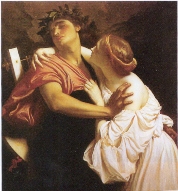
In Act III, after a brief moment of happiness between Orfeo and Eurydice before she dies again, cut up the Romaine lettuce, refrigerate it, and melt butter for the corn on the cob. The chicken and corn should be ready soon after Orfeo sings the famous aria, “Che farò senza Euridice? J’ai perdu mon Eurydice.”
Set the table, get the salad and melted butter, pour another glass of wine, and dine on your meal, just as Orfeo and Eurydice get together again. Perhaps you’ll be singing Trionfi Amore at the end of the meal and the opera.
Bon Appetit!
~Lilly Gibson, KMFA Announcer
You can hear Lilly Gibson on Saturday afternoons, as she hosts KMFA’s Saturday Matinee from 12 noon until 5 pm.
 This past Sunday, I was fortunate to have acquired tickets to The Eroica Trio… they performed a stunning concert at Bates Recital Hall, UT Butler School of Music, as part of The Austin Chamber Music Festival. I really enjoyed the colorful and varied program that showcased both the talents of the individuals as well as the group’s uncanny sense of “oneness.” The highlight for me was the Piano Trio no. 1 by Edouard Lalo with it’s achingly beautiful “romance/andante” movement. Now I realize why this trio is one of the most sought-after in the classical music world.
 Check out the June issue of Austin Woman Magazine to read up about KMFA announcer Dianne Donovan. In the article Dianne shares what her life is like outside of KMFA including, singing, cooking classes, and even the soothing effects of yoga.


 local austin culture